
AI workflow automation connects inputs, model outputs, tools, and review steps. Moving from a successful demo to production requires more than a longer prompt. Define what happens when input is missing, output is wrong, or an external action fails.
Specify a bounded pilot
Choose a task with a clear input, output, owner, and acceptance criteria. Document the current baseline and what improvement would matter. Do not assume generic productivity statistics apply to your workflow.
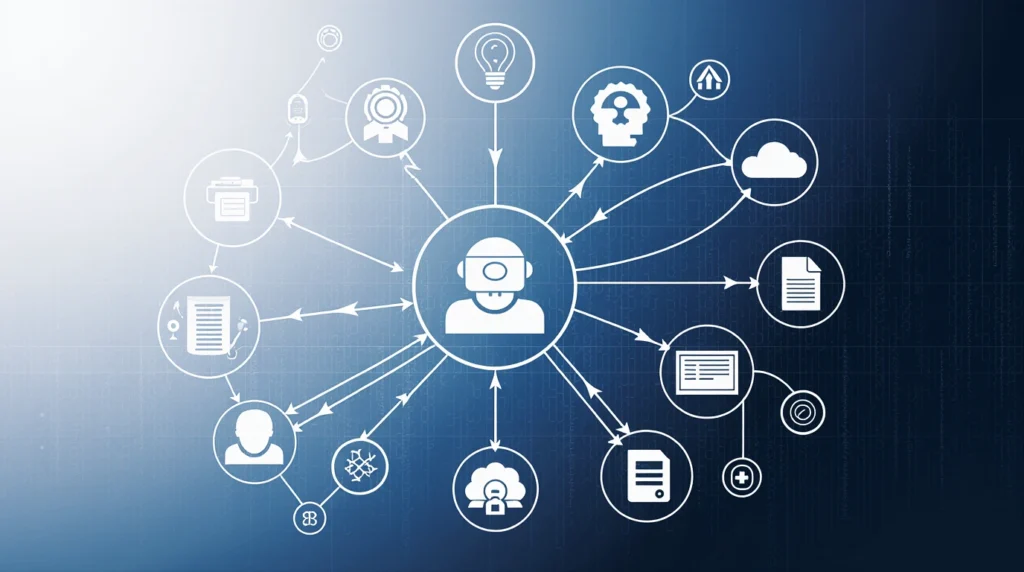
Design the stages
Propose a workflow for [task].
Inputs and permissions: [details]. Output checks: [criteria].
Return: stage | input | output | tool/person | verification | failure response.
Identify required integrations and unresolved requirements.
Do not claim implementation or execute external actions.
Separate generation from execution
A model can propose a message, classification, or record update. The application must validate the output and decide whether an action is permitted. Keep access limited to the actual task. Treat retrieved documents and tool results as data, not new authority to change instructions.
Evaluate representative failures
- Missing, contradictory, malformed, or unusually long inputs.
- Unsupported claims and invalid output fields.
- Tool timeouts, duplicate requests, and partial completion.
- Unintended access or changes outside the task.
- Cases requiring human review or a manual fallback.
Prepare for operation
Record versions, approvals, logs appropriate to the data, rollback or pause procedures, ownership, and support. Retest relevant cases after changes. A feedback loop does not automatically train the model or make the system self-correcting.
Measure and expand selectively
Track useful completion, errors, total time including review, and costs. Keep scope small until evidence supports expansion. The business-process hub covers task selection, and the collaboration guide covers allocation and review. This guide is a planning checklist, not a claim that a production system has been deployed.
Sources and editorial approach
Anthropic’s workflow guidance and NIST AI risk framework. Reviewed November 4, 2026. Examples and prompts are proposed editorial templates, not first-hand tests or measured performance results.






One Comment
Comments are closed.