Communication principles can help you specify an AI task, but a chatbot is not a human negotiating partner. This article explores a limited analogy with Never Split the Difference by Chris Voss and Tahl Raz. It is not a personal reading testimonial or a claim that negotiation techniques have been validated for AI.
Treat the book as communication context
The publisher describes a book about negotiation. Its human negotiation context does not establish a mechanism for improving model accuracy. Avoid attributing emotions, intentions, or a knowable “worldview” to a model based on the analogy.
Lesson 1: clarify the desired outcome
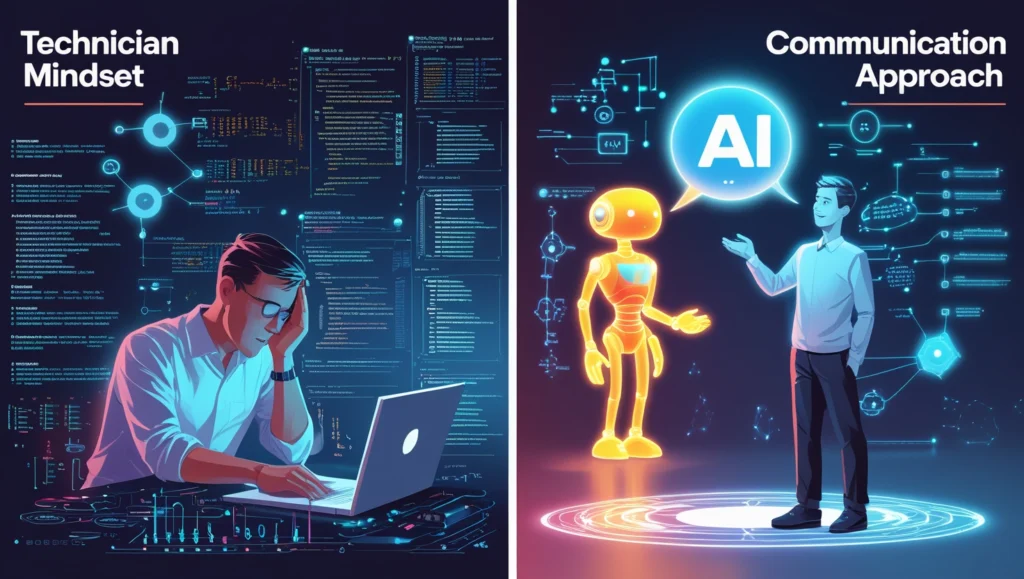
State what you need, who will use it, and how you will judge it. You do not need to guess the model’s training documents or persuade it to care. The useful translation is a clear specification.
Help me summarize this source for [reader].
Goal: [reader outcome].
Output: [format].
Use only supplied evidence; flag missing facts.
Source: [text]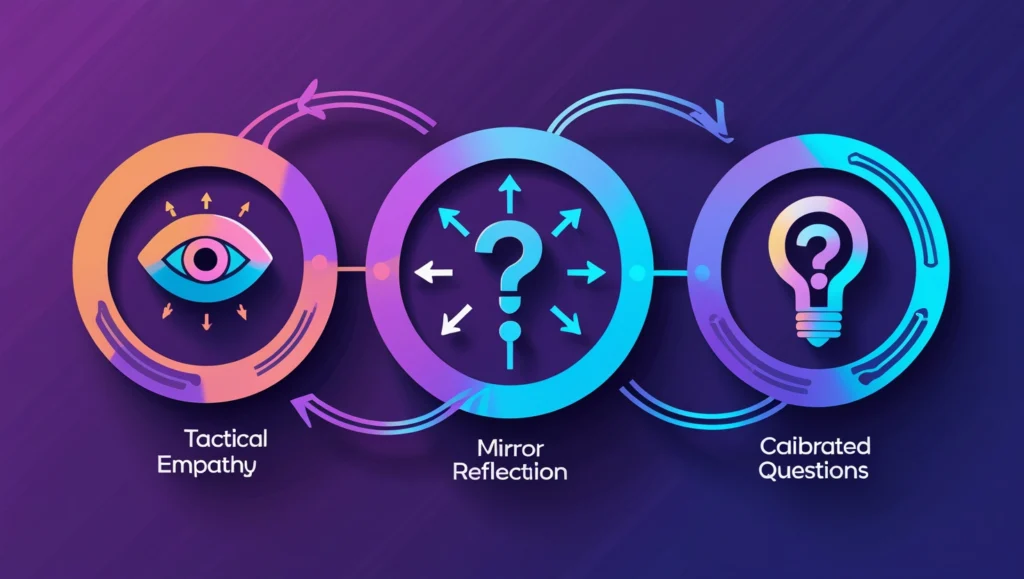
Lesson 2: check the interpretation
Before a long draft, ask for a brief summary of the task, constraints, and missing information. Compare that summary with your intention. Agreement in a conversation does not establish that future output will comply.
Restate the task and list its constraints.
Identify ambiguities that would change the answer.
Do not begin drafting until the missing requirements are resolved.
Lesson 3: ask questions that expose gaps
Open questions can reveal assumptions, but generated objections are hypotheses. Ask for their evidential basis. Do not replace a factual check with an appealing discussion.
For this proposal, separate evidence, interpretation, and assumptions.
Which uncertainty most affects the decision?
What observation would favor another option?
Do not invent evidence or objections merely to disagree.
Where the analogy breaks
A model’s response depends on its instructions, context, tools, and capabilities. Negotiation terminology does not guarantee truth, expert judgment, or compliance. Use thinking-partner prompts for structured questioning and source checks for facts.
Evaluate the prompt rather than the metaphor
Try representative tasks with checkable answers, record the exact instructions and errors, then compare revisions. Keep a communication technique only when it helps the task. For a technical foundation, use our prompt engineering guide.
Sources and editorial approach
Background: OpenAI prompting guidance. Reviewed November 4, 2026. Examples and prompts are proposed editorial templates, not first-hand tests or measured performance results.