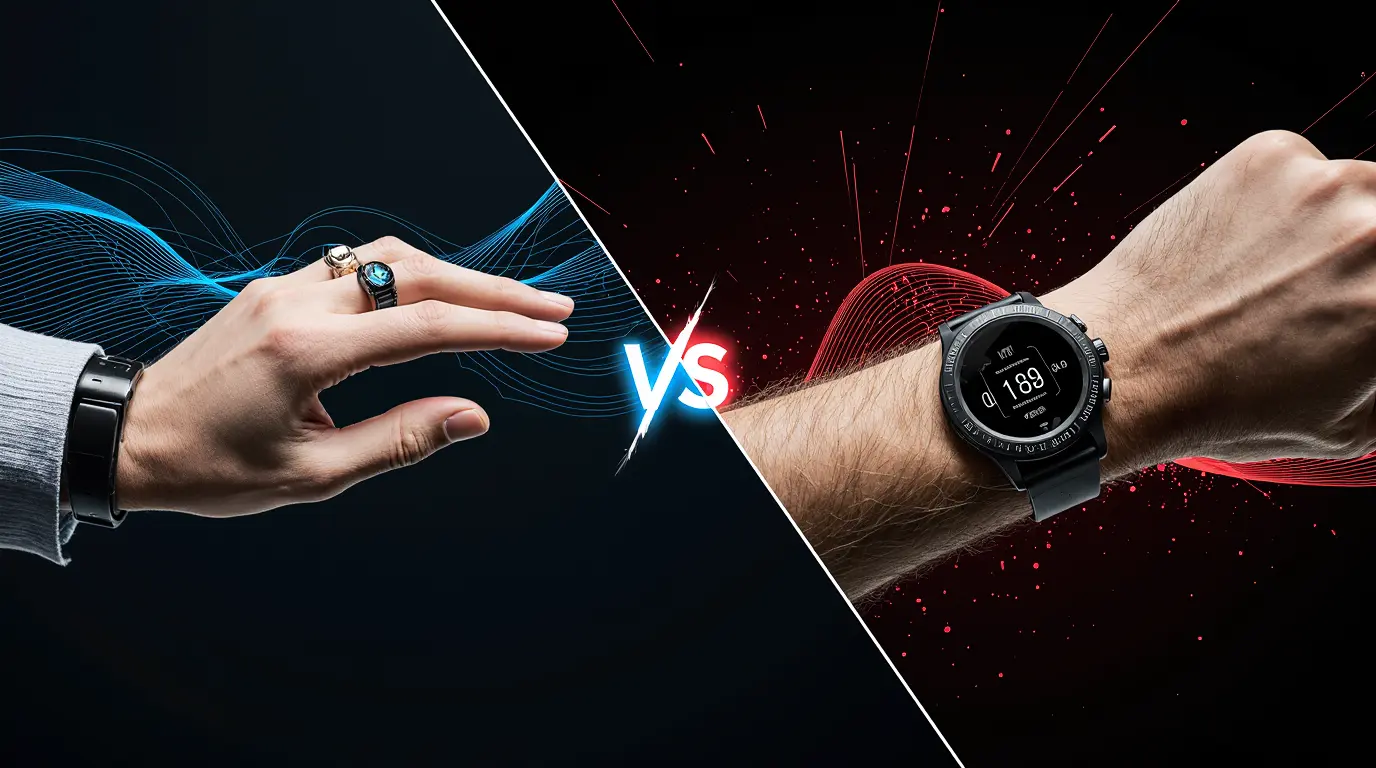
Oura Ring vs WHOOP: choose Oura if you prefer a ring and want to review sleep, readiness, and everyday activity; consider WHOOP if your priority is organizing training around sleep, strain, and recovery. This is a recommendation about workflow and wear preference, not proof that either device measures more accurately or improves health outcomes.
Both overlap in sleep and recovery tracking. The useful difference is which format you can wear consistently, which information you will act on, and what the hardware and membership cost. This guide is based on manufacturer documentation, not a first-hand test.
Jump to: Comparison table · Sleep · Recovery and training · Longevity · Cost · Common questions
Oura Ring vs WHOOP at a Glance
| Decision | Oura Ring | WHOOP |
|---|---|---|
| Wear format | Finger-worn ring; sizing and comfort matter. | Band-based wearable; check supported placement and accessories. |
| Core score framework | Sleep, Readiness, and Activity. | Sleep, Recovery, and Strain. |
| Sleep-focused routine | Consider if you prefer a ring for overnight wear and everyday trends. | Consider if you want sleep information alongside training strain and recovery. |
| Training-focused routine | Review activity and readiness in the context of your program. | Inspect strain and recovery features for your sport and membership. |
| Payment structure | Ring purchase plus membership for detailed functionality. | Membership tiers with included hardware; compare the full commitment. |
| What this comparison does not establish | A universal accuracy or health-outcome winner. | A universal accuracy or health-outcome winner. |
Feature basis: Oura’s score explanation, Oura Membership, and WHOOP’s membership comparison. Regional offers and eligibility can differ.
Oura or WHOOP for Sleep Tracking?
For a sleep-first buyer, start with overnight comfort and the information available the next morning. Oura organizes its app around Sleep, Readiness, and Activity scores; its membership includes detailed sleep analysis. WHOOP lists Sleep alongside Recovery and Strain, which may suit someone reviewing sleep in the context of regular training.
Our practical recommendation is Oura for someone who specifically prefers a ring and a sleep-and-daily-routine workflow. Choose WHOOP instead if a band is more comfortable and you want sleep linked to your training dashboard. Neither preference establishes which device is more accurate at identifying sleep stages.
Which Is Better for Workout Recovery and Athletes?
WHOOP is worth examining first when your main question is how to organize training around recorded strain and recovery. Oura is worth considering when you want activity and recovery information in a ring you also use to follow sleep and daily habits. Check the actual sport features, placement options, and membership before deciding.
Oura describes Readiness as combining sleep, recent activity, and signals such as resting heart rate, heart-rate variability, and temperature. WHOOP presents Recovery alongside its Sleep and Strain metrics. These are product-specific interpretations: an Oura score and a WHOOP score should not be treated as interchangeable measurements.
Look at changes over time alongside your training log and how you feel. A favorable score is not clearance to train through pain or illness. If you already use another recovery tracker, compare whether switching adds a useful decision rather than merely another score.
Is Oura or WHOOP Better for Longevity?
This guide does not establish that either wearable increases lifespan. Tracking sleep, activity, or a proprietary age-related metric is different from demonstrating a longer life. Choose based on whether the information helps you maintain useful habits and whether you can justify the ongoing cost.
WHOOP lists Healthspan and Pace of Aging with Peak and higher tiers in the reviewed comparison. Treat these as named product features, not proof of extra years of life or a substitute for medical assessment. There is no evidence presented here for a longevity winner.
Start with the exact product
The previous version compared Oura Gen3 and WHOOP 4.0 while presenting itself as a current comparison. Those are not an adequate description of today’s product lineup. Oura’s current FAQ includes newer ring generations; WHOOP’s membership page lists WHOOP 5.0 with One and Peak, and WHOOP MG with Life. Verify the actual listing and included device before purchase.

Compare the wear experience
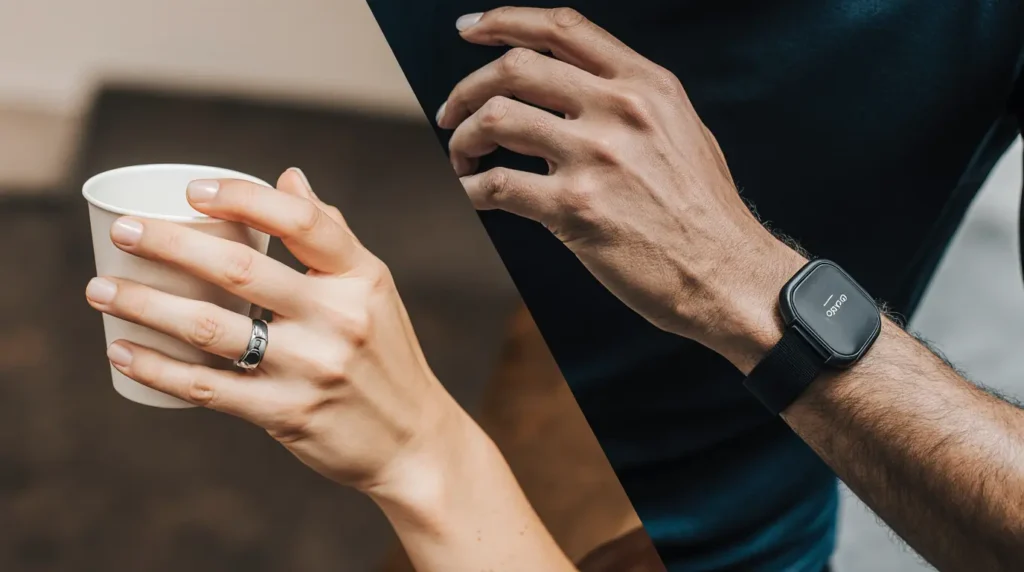
For a ring, check the sizing kit, fit changes, comfort during sleep, and suitability for your work or activities. For a band, examine fit, placement options supported by the provider, skin comfort, and how you will wear it consistently. Follow product safety guidance; do not assume either format suits every activity.
Compare membership and ownership cost
Oura combines a hardware purchase with membership-dependent functionality. WHOOP organizes its current offering around membership tiers with included hardware. Check Oura’s membership details and WHOOP’s local offer for taxes, billing term, trial conditions, cancellation, returns, and what remains usable after cancellation. Promotional prices are not a permanent total-cost estimate.
For U.S. buyers, Oura lists membership at $5.99 per month or $69.99 per year, before tax, in addition to the ring. New members receive a first included month with the ring purchase. Without active membership, access is limited, including the three daily scores rather than detailed analysis. Check the current terms for your account and country.
Compare the same ownership period: for Oura, add the selected ring price, the membership billed during that period, tax, and any accessories. For WHOOP, add the selected plan’s full billing commitment, tax, and accessories. Include renewal costs and any trial-return conditions. A low initial payment does not by itself establish better value.
Match features to the task
- If your aim is sleep logging, compare the information displayed and whether it helps maintain a useful routine.
- If you train regularly, inspect the supported activity and training features rather than assuming a recovery score tells you how hard it is safe to exercise.
- If a health feature matters, verify hardware, membership, country, eligibility, intended use, and regulatory status for that exact feature.
Accuracy needs an actual comparison
Provider documentation describes features; it does not prove a head-to-head winner. Validation depends on the measurement, method, population, and conditions. Do not transfer a study of an older device to a newer generation without evidence. An app score is not a substitute for clinical assessment.
A decision checklist
Compare these two exact wearable offers using supplied documentation.
For each: hardware, sizing, subscription, features I need, eligibility, total cost, return terms, and missing evidence.
Priorities: [details]. Offers: [documents and dates].
Do not invent accuracy scores, predict health outcomes, or select a winner without explaining trade-offs.
Use the HRV guide and sleep-tracker limits before interpreting scores. Keep the device only if its information is useful enough to justify wear and cost.
Frequently Asked Questions
Is WHOOP a ring? The WHOOP products discussed here are band-based wearables, not rings. Oura is the ring option in this comparison.
Should I compare Oura Ring 4 with WHOOP 4.0? Only if those are the exact devices you are considering. An older-generation comparison cannot stand in for current hardware and membership offers. For used devices, check battery condition, account transfer, support, and subscription requirements.
Which offers better value? The one whose information you use consistently at an acceptable total cost. Compare the same duration, needed features, and renewal terms. A larger feature list has little value if you do not use it.
Which is more accurate? Manufacturer feature lists alone cannot settle this. Look for head-to-head evidence for the exact generations, measurement, activity, and population that matter to you.
Sources and editorial approach
Oura FAQ, Oura Membership, and WHOOP membership comparison. Membership and score documentation rechecked November 11, 2026. Examples and prompts are proposed editorial templates, not first-hand tests or measured performance results.





4 Comments
Comments are closed.